

Who Is a Good Candidate for Spinal Decompression Therapy?
Spinal decompression therapy gets a lot of attention, and not all of it is accurate. Some offices present it as a fix for nearly every back problem. In reality, it works best for a specific group of patients, and it is not appropriate for others. At Loop Spine & Sports Center, deciding whether someone is a good candidate is one of the most important parts of the first visit.
This article explains what decompression therapy is designed to do, which conditions and symptom patterns tend to respond well, who should not have it, and how Dr. Trottier determines whether it makes sense for you.
What Spinal Decompression Therapy Does
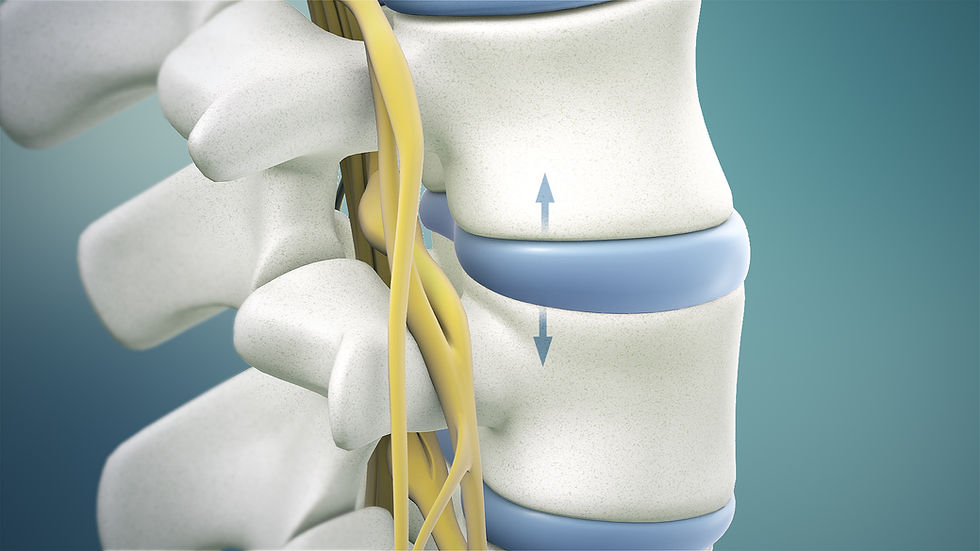
Spinal decompression therapy is a non-surgical approach that uses a controlled, gradual stretching force to gently create space between spinal segments. The goal is to reduce pressure on compressed disc space and irritated nerves, and to give the affected area a better environment for settling down. Patients lie comfortably on a specially designed table, and the process is not meant to be painful.
It is related to, but not identical to, flexion distraction, a hands-on technique that also gently opens the spinal segments. Which approach fits best depends on your condition, your comfort, and what the examination shows. In many cases, either one is combined with chiropractic adjustments or other supportive care.
Conditions That May Respond Well
Herniated and Bulging Discs
When a disc bulges or herniates and presses on a nearby nerve, the result can be sharp low back pain with leg symptoms. Decompression aims to reduce that pressure. If you are trying to sort out whether your symptoms point to a disc problem, our post on herniated disc vs. muscle strain explains the differences, and our herniated discs page covers the condition in more depth.
Degenerated Discs
Discs naturally lose height and hydration over time, which can leave the low back stiff, achy, and prone to flare-ups. Decompression may help reduce the load on these discs and improve comfort in patients whose degeneration is moderate. You can read more on our degenerated discs page.
Sciatica Caused by Nerve Irritation
True sciatica, pain traveling from the low back through the buttock and down the leg, is often driven by a disc or by narrowing around the nerve root. When that is the source, decompression can be a reasonable option. When the source is something else, such as a muscular or joint issue, other approaches may fit better. Our low back pain vs. sciatica guide and our sciatica page can help you understand the distinction.
Spinal Stenosis and Facet Irritation
Some patients with narrowing of the spinal canal or irritated facet joints find that gentle decompression helps them stay more comfortable and active. It does not reverse the underlying narrowing, which we discuss in our post on lumbar spinal stenosis, but it can be one useful part of a conservative plan.
Persistent Low Back Pain That Has Not Settled
If you have had low back pain that keeps returning or has not responded to rest, medication, or general exercise, a closer look at the discs and spinal segments may uncover why. Decompression is not the default answer here, but it can be appropriate when the exam and imaging point to a disc-related cause.
Signs You May Be a Good Candidate
Every patient is different, but candidates often share some of these features:
Low back pain with pain, tingling, or numbness traveling into the buttock or leg
Symptoms that worsen with prolonged sitting, bending forward, lifting, coughing, or sneezing
Exam findings or imaging that suggest a disc bulge, herniation, or disc degeneration
Pain that has lasted several weeks or longer without meaningful improvement from simpler measures
A desire to explore conservative options before considering injections or surgery
No red flags or conditions that would make decompression unsafe
Having some of these features does not guarantee decompression is the right fit, which is why an examination always comes first.
Who Is Not a Good Candidate
Decompression is not appropriate for everyone. Situations where it is generally avoided or requires a different approach include:
Pregnancy. Our office offers prenatal chiropractic care using modified techniques instead, and our post on sciatica during pregnancy explains the approach.
Spinal fractures or a history of significant spinal trauma that has not been cleared
Tumors, infection, or other serious disease involving the spine
Severe osteoporosis or significantly weakened bone
An abdominal aortic aneurysm
Spinal instability, such as a severe slipped vertebra
Certain spinal surgeries or implanted hardware, which are evaluated case by case
Some symptoms are medical emergencies and need immediate care rather than any form of chiropractic treatment: new weakness in the legs, loss of bladder or bowel control, or numbness in the groin or inner thighs. If you experience any of these, go to the emergency room. Our post on red flags in chiropractic care covers warning signs worth knowing about.
How Candidacy Is Determined
A proper evaluation includes your history, a physical and orthopedic examination, and digital X-rays if needed. In some cases, particularly when symptoms are severe or progressing, advanced imaging such as an MRI may be recommended before care begins. The goal is to identify what is actually generating your symptoms and to confirm that nothing in your history makes decompression inappropriate.
If you have never visited a chiropractor, our post on what to expect at your first chiropractic appointment walks through the process step by step. You can also learn more about Dr. Ron Trottier, who has been serving the Chicago area since 1996 and the Loop since 2000.
What Care Typically Looks Like
If you are a good candidate, Dr. Trottier will explain the plan, including how often you will come in and how progress will be measured. Decompression is commonly paired with other tools, which may include electrical stimulation therapy to help calm irritated tissue and massage therapy to address muscle tension that develops around a painful area.
Care is reassessed along the way. If you are improving, the plan continues or tapers. If you are not responding as expected, the plan changes, or you are referred for further evaluation. A good plan has a defined purpose and a defined point at which it is reviewed.
Setting Honest Expectations
Decompression therapy helps many patients, but it does not help everyone, and it is not a cure for disc degeneration or spinal arthritis. The research on non-surgical decompression is mixed in quality, and results vary from person to person. Some patients notice meaningful relief within a few weeks; others see modest improvement or none. Surgery remains the right choice for some cases, particularly those involving progressive weakness or severe nerve compression. Our post on spinal decompression vs. surgery goes into when each makes sense.
A Note for Chicago Desk Workers
Many of the disc-related problems we see in the Loop are tied to long hours of sitting, which places sustained load on the lumbar discs. If that describes your workday, our posts on the connection between desk work and back and neck pain and the Chicago Loop worker's guide to low back pain offer practical steps alongside in-office care.
The Next Step
The best way to find out whether decompression is right for you is a hands-on evaluation. If it turns out not to be the right fit, you will hear that directly, along with what we recommend instead.
New patients can take advantage of our $75 first visit special, which includes a thorough consultation, complete spinal examination, digital X-rays if needed, and a report of findings. Mention this offer when you call, text, or book online to receive the special rate. No pressure, no obligation. Just an honest conversation about what is going on and whether we can help.
Patients using insurance will be billed according to their plan's fee schedule. Copays, coinsurance, and deductible amounts may apply.