

When Should You See a Chiropractor for Low Back Pain?

Low back pain is one of those conditions that people tend to manage on their own for longer than they should. Rest, over-the-counter pain relievers, heat, ice, and the hope that it will resolve on its own are the default responses for most people, and sometimes that approach works. But sometimes it does not, and waiting too long to get proper care can turn an acute problem into a chronic one that is significantly harder to resolve.
So when does low back pain cross the line from something you can manage on your own to something that warrants a professional evaluation? Dr. Ron Trottier has been answering that question for patients at Loop Spine & Sports Center in downtown Chicago since 2000. Here is how to think about it.
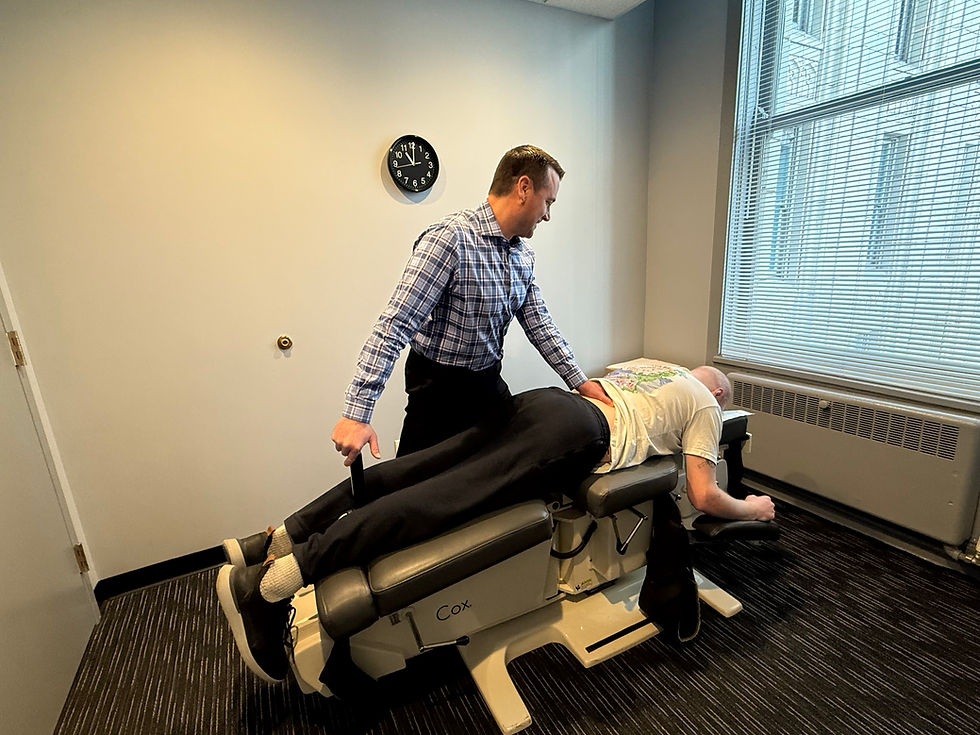
When It Is Reasonable to Wait
Not every episode of low back pain requires immediate professional attention. Mild muscle soreness after an unusual physical activity, the familiar stiffness that comes from sitting too long, or minor tension that develops after a long week at the desk can often resolve with a few days of rest, gentle movement, and basic self-care.
If your symptoms are mild, not getting worse, and not accompanied by any neurological symptoms like leg pain, numbness, or tingling, a short waiting period is reasonable.
That said, even mild recurring low back pain that keeps coming back is telling you something. Symptoms that resolve and return are not a sign that the problem is minor. They are a sign that the underlying mechanical problem has not been addressed and is continuing to create the same pattern of breakdown and temporary recovery.
When You Should Stop Waiting and Get Evaluated
There are clear situations where waiting is not the right choice. If any of the following apply to you, it is time to get a proper examination rather than continuing to manage on your own.
Your pain has lasted more than two weeks
Acute low back pain that does not begin to improve within two weeks is unlikely to resolve fully on its own. At that point the body has had time to adapt to the mechanical problem, muscle tension and compensatory movement patterns have set in, and the window for quick resolution has narrowed. Getting evaluated at the two-week mark rather than the two-month mark makes a significant difference in how quickly care produces results.
Your pain is getting worse rather than better
Pain that is progressively worsening rather than gradually improving is not something to wait out. A condition that is deteriorating needs to be assessed before it becomes more difficult to manage.
You have any radiating pain, numbness, or tingling in your legs
This is the clearest signal that something beyond a simple muscle strain is going on. Radiating symptoms that travel from the lower back into the buttock and down the leg suggest nerve involvement, most commonly from a herniated or bulging disc pressing on a nerve root. These symptoms warrant prompt evaluation. Nerve irritation that is left untreated tends to become more entrenched over time.
Your pain is affecting your sleep
Low back pain that wakes you up at night or prevents you from finding a comfortable sleeping position is significant. Sleep is when the body recovers, and pain that disrupts sleep compounds the problem by impairing the healing process and depleting the physical and mental resources needed to cope with the condition.
Your pain is affecting your ability to work or function normally
For patients in the Chicago Loop, low back pain that makes it difficult to sit through a workday, walk to the train, or perform the basic activities of daily life is a functional problem that deserves attention. Pain that is limiting your life is not something to simply push through indefinitely.
You have had this before and it keeps coming back
Recurring low back pain is one of the strongest arguments for getting evaluated even when the current episode is not severe. Each recurrence typically involves the same underlying mechanical problem that was never fully resolved. Addressing the root cause rather than managing each episode as it arrives is how you break the cycle.
What About Seeing Your Primary Care Doctor First?
Many patients assume they should see their primary care physician before seeing a chiropractor. For most cases of mechanical low back pain, that step is not necessary. You do not need a referral to see a chiropractor and most insurance plans, including Blue Cross Blue Shield, Aetna, United Healthcare, Cigna, and Medicare, cover chiropractic care directly without requiring a referral from a primary care physician.
That said, there are situations where a medical evaluation should come first. If your back pain is accompanied by fever, unexplained weight loss, pain that is worst at night and not related to position, or any loss of bladder or bowel control, those are red flag symptoms that warrant immediate medical attention before chiropractic care is considered. These presentations are rare, but they are important to rule out.
What Happens When You Come In
At Loop Spine & Sports Center, the first visit is designed to give you a clear picture of what is going on before any treatment begins. Dr. Trottier will take a thorough history, perform orthopedic and neurological examination, and take digital X-rays if clinically indicated. He will review his findings with you in plain language and explain what he recommends and why before treatment starts. In most cases treatment begins the same day.
The goal of that first visit is not to lock you into a long-term program. It is to find out what is causing your low back pain and give you an honest assessment of whether chiropractic care is the right fit for your situation. If it is not, you will be told that directly and pointed toward the right next step.
The Cost of Waiting Too Long
The most common reason patients wait is the hope that the pain will resolve on its own. Sometimes it does. But the patients who come in after months of managing a worsening condition consistently take longer to respond to care and require more treatment to achieve the same result as patients who come in earlier. Acute conditions that are treated promptly tend to resolve faster and more completely than chronic conditions that have had time to become established.
If you have been telling yourself you will deal with it when it gets bad enough, consider that getting evaluated now, before it gets worse, is almost always the more efficient path.
Ready to Find Out What Is Going On?
Dr. Ron Trottier has been evaluating and treating low back pain in downtown Chicago since 2000. Loop Spine & Sports Center is located at 30 N. Michigan Ave., Suite 605 in the heart of the Chicago Loop, steps from Millennium Park and accessible from every CTA train line.
New patients can take advantage of our $75 first visit special, which includes a thorough consultation, complete spinal examination, digital X-rays if needed, and a report of findings. Mention this offer when you call, text, or book online to receive the special rate. No pressure, no obligation. Just an honest conversation about what is going on and whether we can help.
Patients using insurance will be billed according to their plan's fee schedule. Copays, coinsurance, and deductible amounts may apply.


